|
|
|
|

|
|
|
|
|
|
The soil and water chemistry in the Rio Zulia, Venezuela are such that the clay remains in stable suspension in the river. |
|
|
|
|
|
|

|
|
|
|
|
|
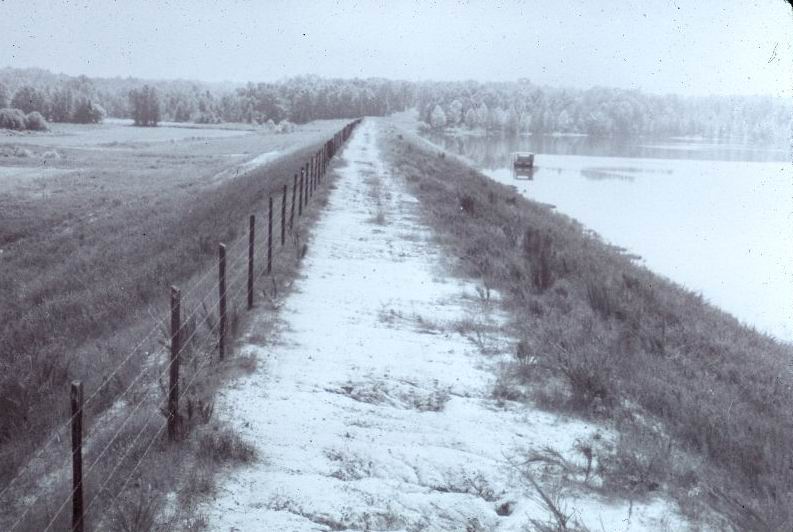
Rio Zulia flood control dike. Sink holes and channels formed by movement of dispersive clays with the seepage water are common. |
|
|
|
|
|
|
|

|
|
|
|
|
|
Piping channel in a small dam in Australia. The dispersive nature of this soil led to its movement with the seepage water which then concentrated to form the hole. |
|
|
|
|
|
|

|
|
|
|
|
|
Schematic diagram illustrating the formation of erosion tunnels in clay dams containing dispersive clay. |
|
|
|
|
|
|
|

|
|
|
|
|
|
Downstream slope of Grenada Dam in Mississippi. |
|
|
|
|
|
|

|
|
|
|
|
|
Erosion tunnel in the slope of Grenada Dam in Mississippi caused by the removal of dispersive clay. The hole diameter is about 24 inches. |
|
|
|
|
|
|
|

|
|
|
|
|
|
The crest of Big San Creek Site 8 Dam in Mississippi contains many dispersive clay erosion channels. |
|
|
|
|
|
|

|
|
|
|
|
|
Closer view of the vertical erosion channels in Big Sand Creek Dam |
|
|
|
|
|
|
|

|
|
|
|
|
|
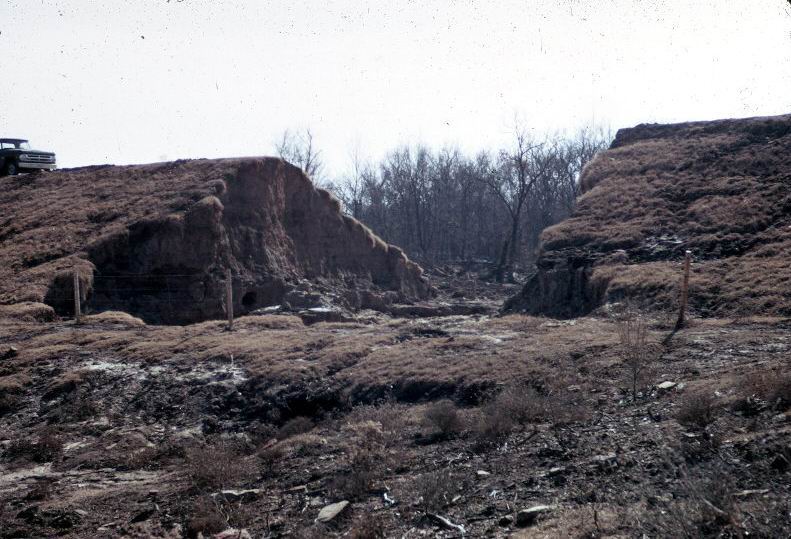
Breach in Upper Clear Boggy Creek Site 50 Dam in Oklahoma. Looking downstream. |
|
|
|
|
|
|

|
|
|
|
|
|
Looking upstream after the breach of Upper Clear Boggy Creek Dam. |
|
|
|
|
|
|
|

|
|
|
|
|
|
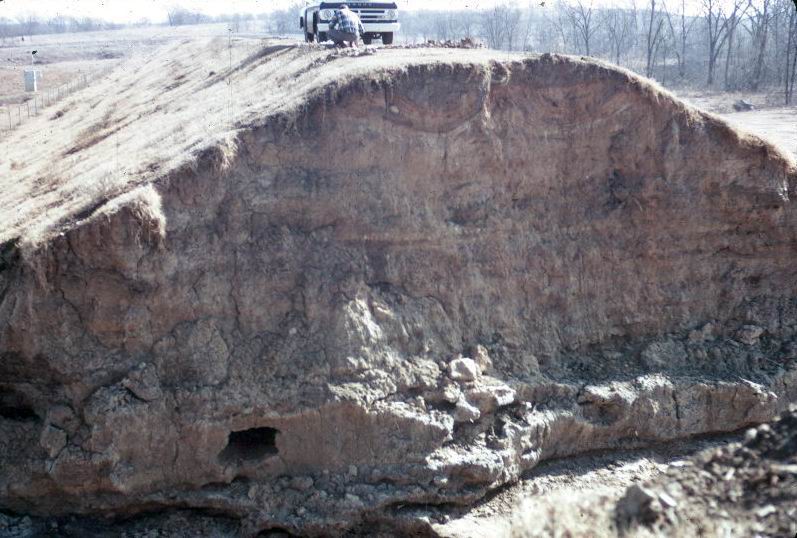
Note erosion tunnel in the breach of Upper Clear Boggy Creek Dam. |
|
|
|
|
|
|

|
|
|
|
|
|
Close up view of the erosion tunnel in the dispersive clay of Upper Clear Boggy Creek Dam in Oklahoma. |
|
|
|
|
|
|
|

|
|
|
|
|
|
Three erosion tunnels in a small dam in Australia that contained dispersive clay. |
|
|
|
|
|
|

|
|
|
|
|
|
“Badlands” topography formed by erosion of dispersive clay slope. |
|
|
|
|
|
|
|

|
|
|
|
|
|
Eroded road cut in dispersive sandy clay in Mississippi. Note the alluvial fan of sand that was left behind. |
|
|
|
|
|
|

|
|
|
|
|
|
Badlands of South Dakota. Dispersive clay has played a role in their development. |
|
|
|
|
|
|